In the world of parking management and vehicle access control, the barrier gate is the physical enforcer. But a barrier is only as good as the system controlling it. Whether you are managing a commercial parking lot, a residential community, or an industrial site, choosing the right control method is critical for efficiency, security, and user experience.
This guide breaks down the most common and advanced ways to control barrier gates, from traditional remotes to cutting-edge smart solutions like WiFi receivers and geomagnetic sensors.
1. Traditional Manual Controls
Remote Control (Transmitters)
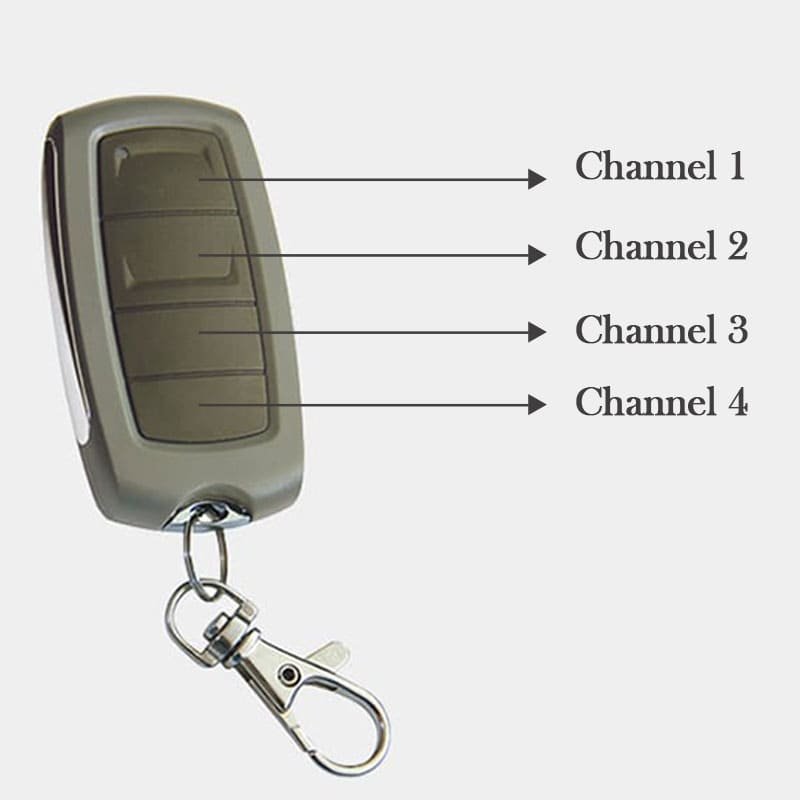
The most ubiquitous form of control is the handheld radio transmitter. Operating typically on the 433.92 MHz frequency, these devices send a wireless signal to a receiver board inside the barrier housing.
- Pros: Simple, inexpensive, and easy to distribute to staff or residents.
- Cons: Batteries need replacing; remotes can be lost or copied.
Used primarily in guard booths, a wired push button connects directly to the barrier’s control board via a dry contact signal. It offers a reliable “up-stop-down” manual override for security personnel.
2. Automated & Identification Systems
License Plate Recognition (LPR)
LPR (or ANPR) systems use high-definition cameras with Optical Character Recognition (OCR) software.
- How it works: The camera captures the license plate as a vehicle approaches. If the plate matches a number in the authorized database, the system sends an “open” signal to the barrier.
- Best for: Ticketless parking lots and high-security corporate entrances.
RS485 Communication: The Backbone of Unattended Systems
For modern, integrated parking systems—especially Unattended (Unmanned) Parking Lots—simple “open/close” signals are not enough. This is where the RS485 communication protocol becomes essential.
Unlike standard switch signals which are one-way (the system tells the gate to move, but doesn’t know if it actually did), RS485 allows for two-way communication between the management computer and the barrier gate.
Why RS485 is critical for Unattended Operations:
- Real-Time Status Feedback: In a ticketless, unmanned system, the billing software needs to know the exact status of the gate. RS485 allows the barrier to report back: “I am currently fully closed.” This confirmation triggers the system to end the parking session and finalize billing, ensuring accurate charges.
- Remote Error Diagnostics: If a barrier stops working in an unmanned lane, you don’t want to send a technician just to find out a sensor was blocked. Through RS485, the barrier can transmit specific error codes (e.g., “Motor Overheat” or “Obstacle Detected”) directly to the central control room. This allows for rapid, remote troubleshooting.
- Long-Distance Stability: RS485 is designed to resist electrical interference and can transmit data reliably over long distances (up to 1200 meters), making it superior to standard wiring for large commercial perimeters.
3. ACCESS TECH Smart Solutions: Upgrading Your Control
While the methods above are standard, modern technology allows for smarter, easier, and more flexible control. Here are two innovative solutions from ACCESS TECH that solve common installation and usage headaches.
A. The WiFi Smart Control (REC2 Receiver)
Turning your traditional barrier into an IoT device.
The ACCESS TECH REC2 External Receiver (WiFi Version) bridges the gap between traditional radio frequency (RF) and modern internet connectivity.
- How it Works: This device wires into your existing barrier gate control board (compatible with most brands) and connects to your local WiFi network. It integrates with the Tuya Smart App.
- Key Features:
- Smartphone App Control: Open or close your gate from anywhere in the world using your phone.
- Voice Control: Compatible with smart home assistants (like Alexa or Google Assistant).
- User Management: Ideal for managing access without handing out physical remotes. You can authorize users digitally.
- High Capacity: It also functions as a standard RF receiver, capable of storing codes for up to 400 remote transmitters, making it a powerhouse for large communities.
Learn more about the REC2 WiFi Smart Receiver here.
B. The Exit Geomagnetic Remote (MDT01)
The wireless, dig-free alternative to loop detectors.
Traditionally, to open a gate automatically when a car leaves (Free Exit), you had to cut the pavement and install an inductive ground loop. The ACCESS TECH Exit Geomagnetic Remote changes this.
- The Principle: This device uses geomagnetic induction technology. It detects the disruption in the earth’s magnetic field caused by a large metal object (a vehicle) moving near it.
- The Function: When a vehicle approaches the exit, the sensor detects the magnetic change and instantly sends a wireless signal to the barrier to open.
- Why it’s Superior:
- No Cutting Required: You don’t need to damage your driveway to install loop wires.
- Solar Powered: It features a built-in battery and solar panel, making it completely wire-free.
- Easy Installation: Simply mount it near the exit path, and it pairs wirelessly with your barrier gate.
Discover how the Exit Geomagnetic Remote works here.
Conclusion
Selecting the right control system depends on your specific traffic flow and infrastructure.
- For attended gates, RS485 and push buttons offer precision.
- For automated security, LPR is the gold standard.
- For smart, retrofit upgrades, the REC2 WiFi Receiver brings app control to any gate.
- For easy exit automation, the Exit Geomagnetic Remote eliminates the need for messy construction work.
By understanding these options, you can build a barrier system that is not just a blockade, but a smart access point.