Our Location
UNIT 1406A, 14/F, THE BELGIAN BANK BUILDING, NOS. 721-725 NATHAN ROAD, MONG KOK HONG KONG

UNIT 1406A, 14/F, THE BELGIAN BANK BUILDING, NOS. 721-725 NATHAN ROAD, MONG KOK HONG KONG

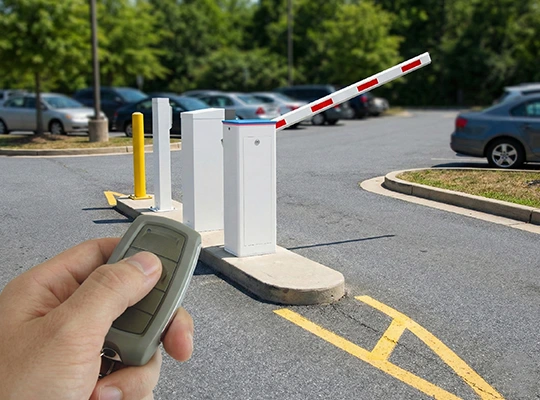
In the world of access control—whether for parking lots, toll stations, or commercial premises—the barrier gate is only as reliable as the remote that controls it. While they all look similar on the outside, the Radio Frequency (RF) technology inside determines the security, convenience, and compatibility of the system.
At ACCESS TECH, we believe in empowering our clients with knowledge. Today, we are breaking down the three main types of remote control encoding technologies—Fixed Code, Rolling Code, and Learning Code—and explaining why the industry has shifted, and what you need to know before your next purchase.
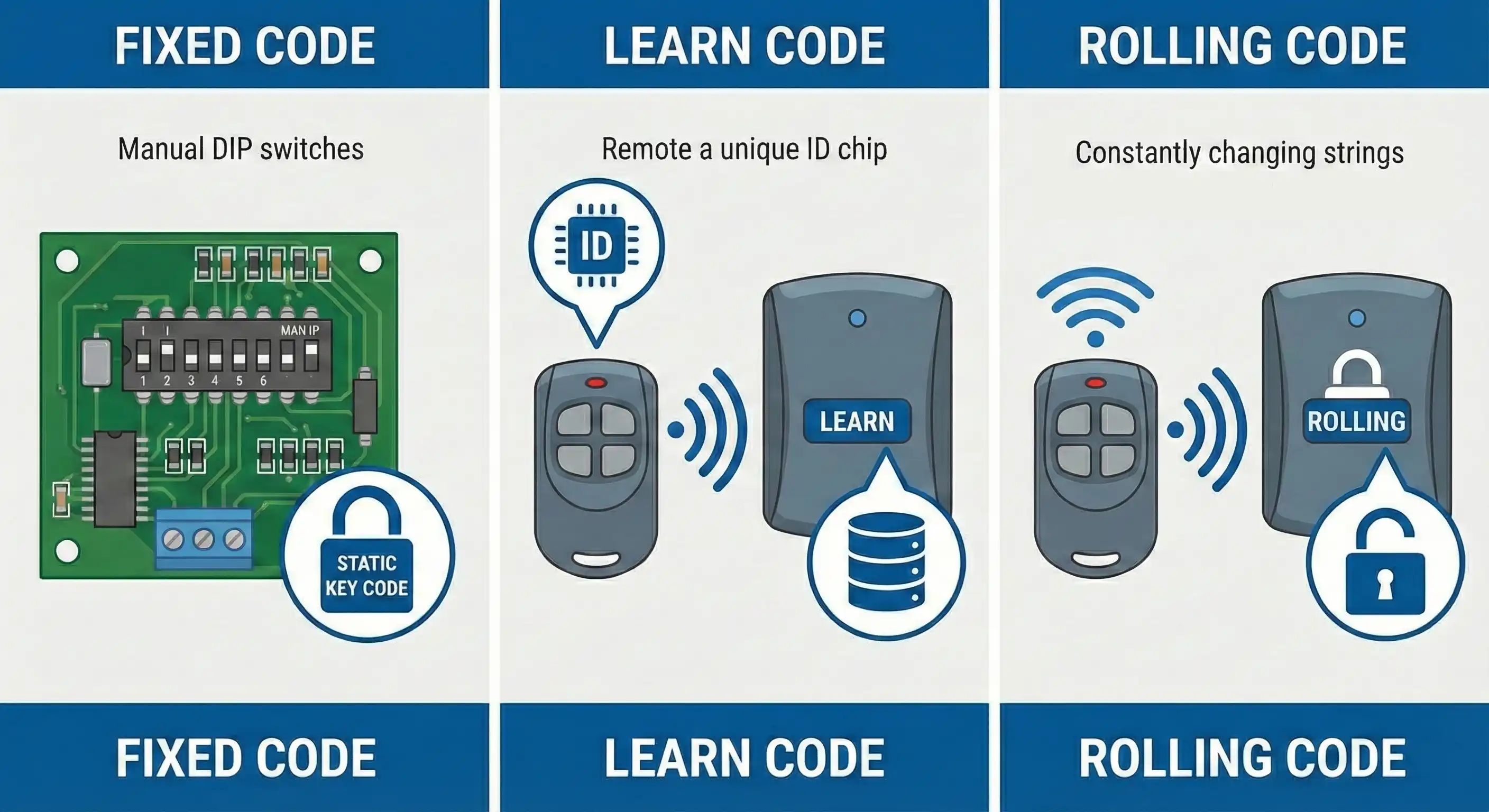
Fixed code technology (often associated with PT2262 chips) is the “grandfather” of RF remotes.
Rolling code (often known as Hopping Code) is the gold standard for high-security applications.
Learning code (commonly EV1527 chips) was developed to solve the inconvenience of Fixed Code DIP switches while maintaining ease of use.
| Feature | Fixed Code | Learning Code | Rolling Code |
| Security Level | Low (Easily Cloned) | Medium-High (Unique ID) | Very High (Encrypted) |
| Interference | Frequent | Rare | Extremely Rare |
| Cost | Low | Moderate | Moderate |
In the past, Fixed Code was dominant. However, as security threats evolved and “cloning” devices became cheap, the industry moved away from DIP switches.
Today, Learning Code is the mainstream choice for most standard applications because it offers the perfect balance: it eliminates the hassle of soldering or flipping switches, provides millions of unique address codes to prevent ghost opening, and is cost-effective.
Rolling Code has secured its place as the premium option for high-security facilities (like government buildings or high-end residential compounds) where preventing signal interception is paramount.
At ACCESS TECH, we prioritize stability and ease of integration for our global clients. For the majority of our barrier gate systems, we provide Learning Code remotes as the standard configuration.
Based on the specifications of our signature remote (see below), we ensure that our standard equipment meets the rigorous demands of daily high-frequency use.
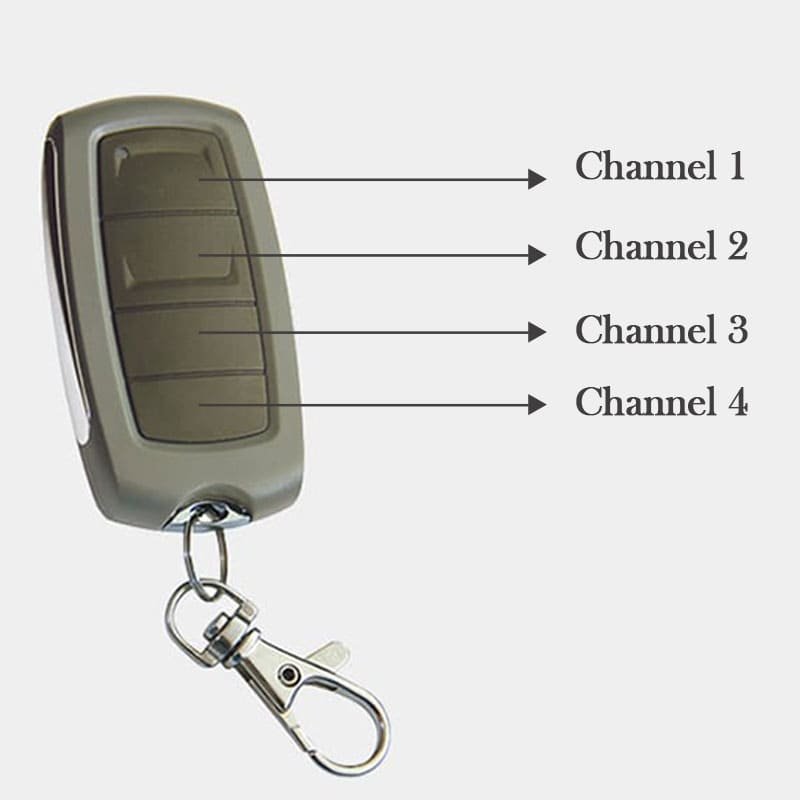
What does “160mAh” mean for you?
A standard RF transmission consumes roughly 12–20mA and lasts only for the duration of the button press (about 1 second). With a 160mAh capacity, this remote can theoretically perform over 30,000 cycles (clicks).
While Learning Code covers 90% of use cases, we understand that some projects demand higher security. ACCESS TECH offers Rolling Code remotes upon request. If your project requires encrypted hopping codes, we can configure your system accordingly.
This is the most important takeaway for our distributors and installers: Remotes are not universally interchangeable.
Because the “language” a Rolling Code remote speaks is fundamentally different from a Learning Code remote, the receiver program (firmware) inside the barrier gate control board is different.
You cannot simply buy a Rolling Code remote and expect it to work with a barrier gate programmed for Learning Code, or vice versa.
Our Advice:
By clarifying this requirement during the ordering process, “Secure Access, Reliable Tech” isn’t just a slogan—it’s a guarantee.
Looking for high-performance barrier gates or need help matching the right remote system to your facility? Contact the ACCESS TECH team today at here.


