Our Location
UNIT 1406A, 14/F, THE BELGIAN BANK BUILDING, NOS. 721-725 NATHAN ROAD, MONG KOK HONG KONG

UNIT 1406A, 14/F, THE BELGIAN BANK BUILDING, NOS. 721-725 NATHAN ROAD, MONG KOK HONG KONG

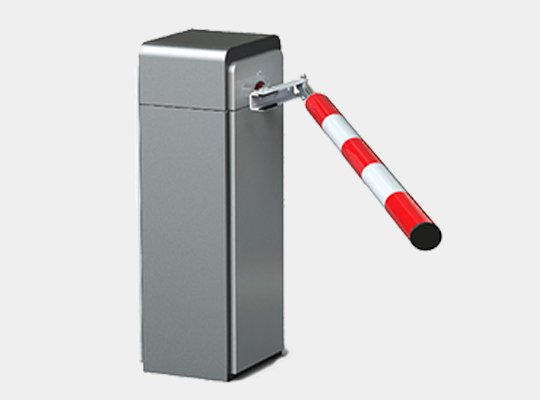
In the world of access control and parking management, efficiency is usually the top priority. However, for facility managers and property owners, safety is the liability that keeps them awake at night.
The nightmare scenario is simple: an automatic barrier arm coming down on a passing vehicle—or worse, a pedestrian. This is where anti-crush technology becomes critical.
Whether you are upgrading an existing system or installing a new one, understanding how to prevent collisions is essential. Below, we break down the four most effective ways to implement anti-crush safety in barrier gates, ranging from mechanical designs to advanced radar technology.
Before we dive into electronic sensors, we must look at the hardware itself. One of the most practical innovations in barrier gate design is the Swing-Away (or Anti-Collision) Boom.
Unlike rigid barrier arms that snap or cause severe denting upon impact, an anti-collision boom is designed with a special mechanism connecting it to the main chassis.
As seen in the image below, if a vehicle accidentally hits the barrier arm, the boom does not resist the force rigidly. Instead, it disengages and rotates horizontally (inward or outward).
The Benefit: This mechanical compliance significantly absorbs the impact energy. It protects the barrier gate’s internal motor from stripping gears and minimizes damage to the vehicle. It is a “passive” safety feature that works even if power fails.
The Loop Detector has long been the most common accessory paired with barrier gates. If you have ever driven up to a ticket dispenser and the machine “woke up,” you likely drove over a loop detector.
Installation involves cutting a rectangular slot into the pavement beneath the boom. A twisted pair of wires is buried inside this slot and connected to a detector module inside the barrier gate cabinet.
For those who need to protect both people and cars without digging up the driveway, Infrared (IR) Sensors (often called photocells) are a popular choice.
This system typically involves a transmitter and a receiver mounted on opposite sides of the lane, or a transceiver with a reflector. It creates a horizontal beam of invisible infrared light across the path of the gate.
The newest and most advanced contender in barrier safety is Millimeter-Wave Radar. While previously considered a premium option, it is quickly becoming the mainstream choice for modern intelligent parking systems.
The radar unit is mounted directly onto the barrier gate cabinet (chassis). It emits radio waves to scan the area beneath the boom. Because it is mounted on the housing, it usually only requires a pre-drilled hole, avoiding any ground construction.
The only historical downside to radar was the price. However, as technology advances, the cost has come down significantly. While it remains slightly more expensive than a basic loop detector or IR sensor, the lack of civil work required often makes the total cost of ownership lower and the safety rating much higher.
| Feature | Best For… | Installation Difficulty | Detects Humans? | Environmental Resistance |
| Swing-Away Boom | Impact Mitigation | N/A (Hardware) | N/A | High |
| Loop Detector | Vehicle Only | High (Ground cutting) | No | High |
| Infrared Sensor | General Obstacles | Low | Yes | Low (Affected by weather) |
| Radar | Comprehensive Safety | Very Low | Yes | High |
Choosing the right anti-crush feature depends on your specific environment. For high-traffic areas exclusively for cars, Loop Detectors are reliable workhorses. If you have mixed traffic with pedestrians, Infrared or Radar is mandatory.
However, for the ultimate balance of ease of installation, safety, and durability, Radar is rapidly becoming the gold standard in the industry.
Need help configuring the safety features for your parking lot? Contact our technical team today to discuss which anti-crush solution fits your barrier gate best.


